Water Security in the Gulf States:
Risk and Resilience
By Omar Saif
April 29 2026
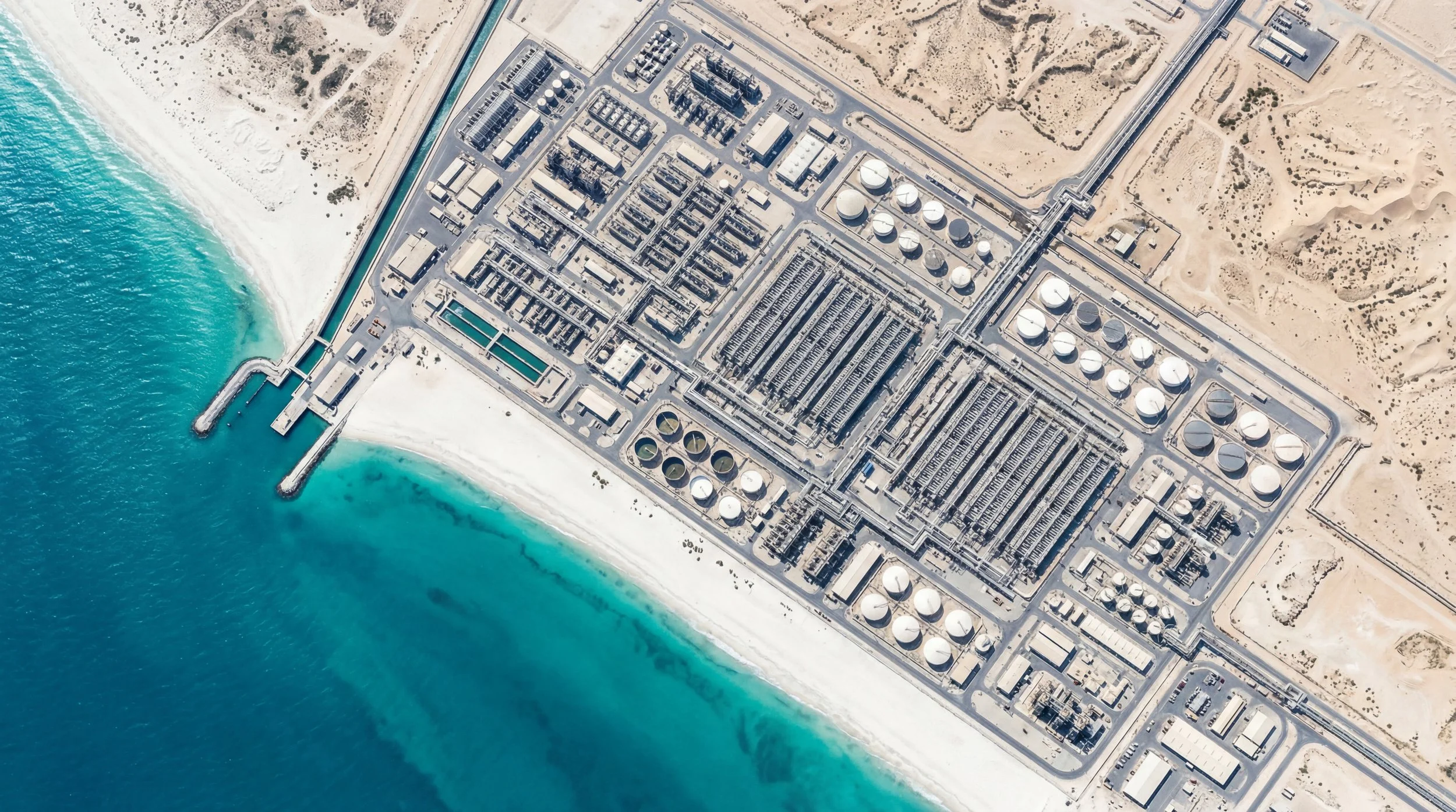
The countries of the Gulf Cooperation Council (GCC) owe much of its growth and prosperity to desalination. Since Kuwait commissioned its first major plant in 1953, the technology has enabled the region to sustain growing populations and economies. It is therefore understandable that desalination is perceived as the major water security topic in the GCC. While this captures a real risk, it is incomplete. A credible risk assessment must consider the entire water value chain, with a focus on sourcing as well as consumption.
On the supply side, GCC countries collectively hold around 45% of global seawater desalination capacity, operating more than 800 seawater-fed plants and providing up to 99% of municipal water needs in some GCC countries. Qatar draws a large share of its supply from desalination, while Saudi Arabia, the region’s largest water consumer, relies heavily on groundwater, making fossil aquifer depletion a parallel long-term constraint. Treated wastewater is an increasingly important supplementary source, yet only about 39% is currently reused across the GCC. The remainder is not yet fully captured for productive reuse, leaving significant scope to strengthen system efficiency over time.
On the demand side, per capita water consumption is among the highest in the world. Demand routinely exceeds 500 liters per person per day, compared to a global average of around 150 to 200 liters. Across the GCC, agriculture accounts for roughly 80% of total water consumption, drawn overwhelmingly from groundwater sources. Agriculture’s outsized share stands in contrast to its modest contribution to GDP, between 0.3% and 2.5% across countries. The remaining municipal supply covers residential, commercial, and industrial cooling demand. Distribution losses from ageing networks and metering inefficiency add further pressure, compounding the gap between production and productive use. Water subsidies, endemic across the GCC and across customer segments to varying degrees, reflect genuine welfare objectives but they also distort the price and perceived value of water across the economy, suppressing incentives for efficiency, demand management, and adoption of more water-conscious technology.
Heavy reliance on desalination in the GCC should not be conflated with low resilience: understanding those risks has driven extensive investment in water security infrastructure, redundancy, and emergency preparedness, while desalination itself serves as a structural defence against the increasing aridity that climate change is bringing to the GCC and broader MENA region.

Heavy reliance on desalination in the GCC should not be conflated with low resilience: understanding those risks has driven extensive investment in water security infrastructure, redundancy, and emergency preparedness
Lessons from System Stress
Municipal water production, concentrated in a small number of large coastal desalination plants, creates risk exposure. When those plants face operational constraints, supply can be affected and service disruption may follow.
The red tide event in the Gulf provides the most instructive case on record. Between August 2008 and May 2009, a harmful algal bloom spread across the Gulf, clogging intake filters and fouling membranes at multiple desalination plants simultaneously across all GCC countries. The incident exposed several vulnerabilities, including seawater intake systems, treatment processes, membrane technology, and most importantly, the overall system management of supply disruptions.
The response that followed reshaped system design and informed subsequent resilience investments across the region. In the case of the UAE, capacity was expanded at Fujairah on the Gulf of Oman coast, reducing reliance on the semi-enclosed Gulf. A national transmission network was developed to move water between emirates, creating engineered backup capacity across geographically separate supply nodes. Additionally, strategic storage was expanded across reservoirs and underground aquifers, such as the Liwa Strategic Water Reserve, which extended Abu Dhabi’s emergency supply window from a matter of days to 90 days.
Other GCC states took similar actions. Qatar, which held barely 48 hours of emergency reserves in 2010, launched a programme of mega-reservoir construction that extended reserves to seven days, while investments in network efficiency reduced distribution losses from 30% to 2%. Saudi Arabia is also expanding its strategic storage by over 7 million cubic meters, as part of its broader National Water Strategy 2030.
Beyond infrastructure and storage, the episode also reinforced the strategic case for a longer-term technology transition. Brought on by improved membranes, intake and treatment systems, that can better handle the Gulf’s harsh water quality, a shift began to take place from power generation tied thermal desalination plants toward reverse osmosis. Critically, this shift also begins to decouple water production from fossil fuel cogeneration infrastructure, a separation with significant implications for both system resilience and the longer-term energy transition.
Such stress events have, in this way, served as a repeated catalyst: exposing vulnerabilities, driving investment, and orienting the region toward more resilient system architectures.
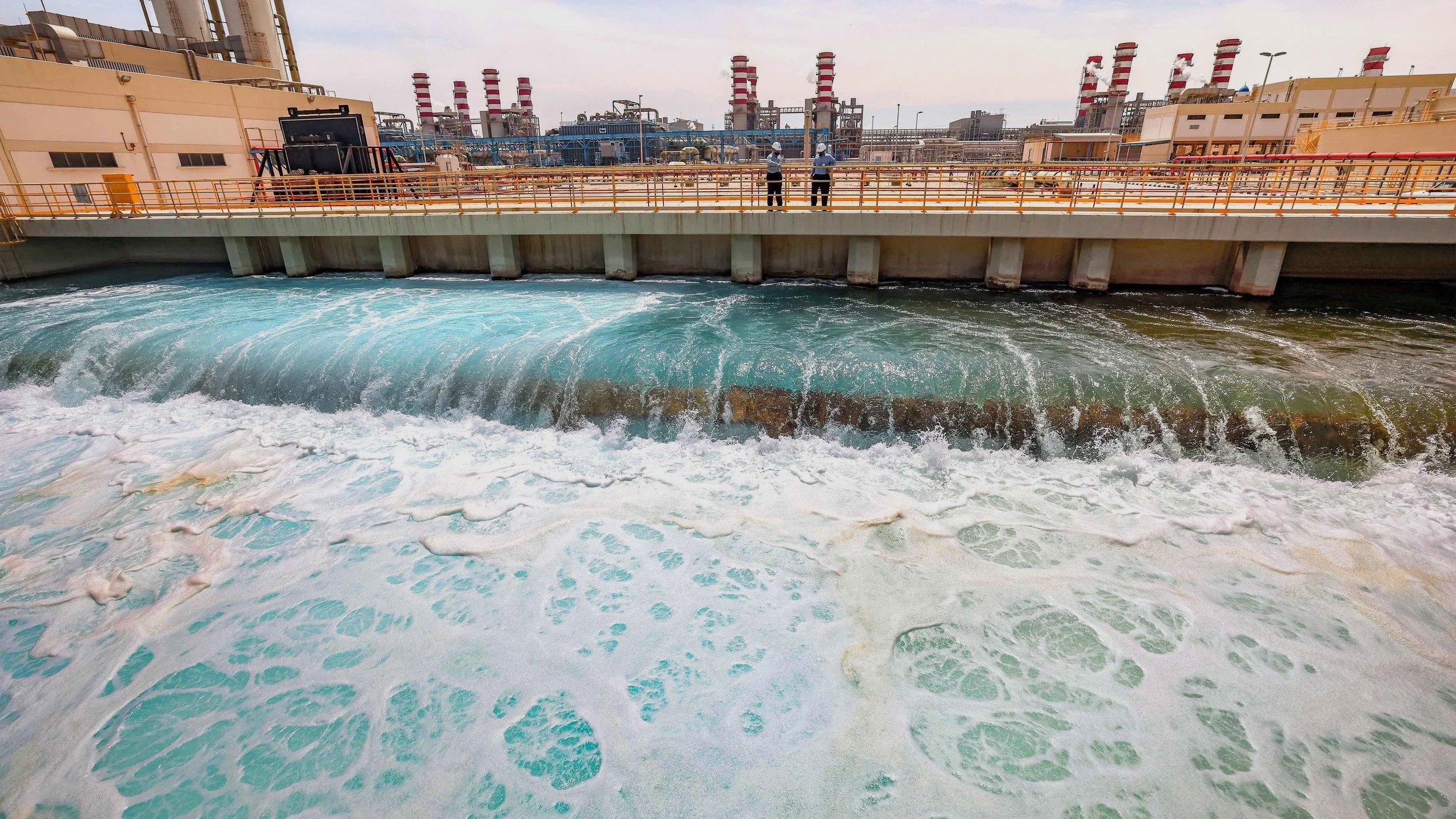
Water treatment basin at Ras Al-Khair, Saudi Arabia — the world's largest desalination plant, combining multi-stage flash distillation and reverse osmosis technologies. Photo: FAYEZ NURELDINE/AFP/Getty Images
Such stress events have, in this way, served as a repeated catalyst: exposing vulnerabilities, driving investment, and orienting the region toward more resilient system architectures
How Disruption Unfolds
Not all disruptions are equal. The system’s response depends on two variables: the duration of the event and its impact across the network. A singular contained failure poses a different challenge compared to a prolonged, system-wide one.
Across all three scenarios below, household water supply is prioritized and protected, and within that, the volumes required for core human needs such as drinking, cooking, sanitation, and healthcare are small relative to total consumption and safeguarded across all stages. What escalates as disruption deepens is not humanitarian risk, but economic cost.
In the short term, measured in days, storage reserves and interconnected transmission networks absorb the initial shock, allowing supply to be redistributed across regions with little visible impact across consumer categories. Recovery runs in parallel: affected units are repaired or replaced; targeted upgrades are made to intake and/or treatment systems where applicable; and normal operations are progressively restored.
Over a period of weeks, demand management becomes the priority. Authorities reduce allocations to non-essential use such as landscaping, irrigation, and commercial cooling while maintaining supply to households and critical services. The region’s high per capita consumption, much of which is attributed to these non-essential uses rather than core household needs, creates significant room for adjustment. At this stage, economic costs begin to accumulate. Water-intensive commercial and industrial operations face rising costs and output constraints. Sectors dependent on continuous, uninterrupted supply, including manufacturing, hospitality, and large-scale cooling systems, absorb the first financial impact; a single hour of supply interruption in a pharmaceutical facility, for instance, carries an estimated cost of approximately one million euros.
A prolonged disruption spanning months, a significantly less likely scenario, would trigger a more fundamental reordering of the system. Rationing decisions would increasingly follow a GDP-to-water-consumption logic, directing available supply toward uses generating the greatest economic return per unit consumed. This implies a substantial reallocation of agricultural water toward municipal and industrial supply, a shift that carries limited food security risk in most GCC countries, given that the region sources approximately 85% of its food requirements from overseas.
On the supply side, non-conventional sources would be activated in parallel: brackish groundwater, treated wastewater, and deeper aquifer reserves functioning as additional buffers beyond what conventional desalination can sustain. Critically, the distribution model itself would begin to shift, with supply moving closer to the point of demand rather than depending on large, centralised facilities. Under sustained supply pressure, market trends would accelerate toward the adoption of commercially available technologies, such as, atmospheric water generation and modular onsite wastewater treatment, already viable at building and district scale.
Taken together, these scenarios reveal a system that adapts in stages, with each stage imposing greater economic cost rather than humanitarian risk.
Taken together, these scenarios reveal a system that adapts in stages, with each stage imposing greater economic cost rather than humanitarian risk
Strengthening Future Resilience
On the supply side, the priority is de-risking desalination rather than simply adding capacity. Two technology shifts matter most. First, plants need to be upgraded to handle a wider range of water quality parameters, including severe pollution or environmental stress conditions. The system’s vulnerability to events like the 2008 to 2009 red tide demonstrated that intake resilience is as important as production capacity. Second, accelerating the shift from thermal desalination to reverse osmosis, already underway across the region, carries strategic implications that extend beyond resilience alone. The decoupling of water production from fossil fuel cogeneration removes a significant constraint on the energy system: it allows renewable energy and nuclear power to enter the grid without the operational dependencies imposed by cogeneration, opening the path to more resilient, low-carbon energy-water systems across the GCC.
Strengthening the broader supply network is equally important. Further investment in water-grid interconnections will allow supply to be redistributed more flexibly if disruptions occur. Protecting aquifers and groundwater resources is another essential piece. Managed aquifer recharge, the deliberate replenishment of aquifers during periods of adequate supply, converts what is typically a passive emergency reserve into an actively managed buffer. Its value in a crisis depends on how responsibly it is maintained beforehand.
These supply-side measures must be complemented by stronger demand-side signals. Some of these require active capital investment: expanding wastewater reuse and decentralising treatment infrastructure, and reducing non-revenue water through improvements to distribution networks, offer substantial returns without requiring additional production capacity. A 2023 study finds that raising the GCC-wide reuse rate from 39% to 72% alone could supply between 82% and 94% of agricultural irrigation demand while reducing groundwater abstraction by 75% to 91%. Others are primarily a matter of policy choice. The subsidized pricing that distorts the perceived value of water across commercial, industrial, and residential segments alike is the highest-leverage intervention available: targeted tariff reform alone could reduce GCC-wide demand by up to 27% without compromising essential household use. Taken together, these measures do not require the GCC to rebuild its water infrastructure. They require more effective use of existing systems and more deliberate planning for potential scenarios.
Beyond Vulnerability
Water security in the GCC is often framed as a story of vulnerability. The reality is much more nuanced. While the system does include real structural exposures, concentrated infrastructure, shared-source sensitivity, and groundwater reserves under pressure, it also reflects substantial investment in redundancy, storage, interconnection, and operational flexibility. The central policy challenge is not water availability in an absolute sense: it is economic continuity, ensuring the system can sustain productive activity when supply is constrained. Strengthening that resilience means acting deliberately in normal times, long before any disruption arrives.
Omar Saif is the Vice President at the Global Climate Finance Centre, specializing in climate and water finance, clean energy deployment, and innovative financing solutions to scale sustainable infrastructure in emerging markets.