Reform or Retreat in the Middle East:
The Iran War's Economic Ultimatum
By Racha Helwa
June 30 2026
The effects of the Iran war will be long-lasting and could reorder economic diversification momentum across oil exporting and energy importing countries in the Middle East and North Africa (MENA). Both groups had, prior to the war, committed to ambitious national diversification programs aimed at reducing their dependence on hydrocarbons and building more resilient, multi-sector economies.
For oil exporters, principally the Gulf Cooperation Council (GCC) countries with ability to bypass the Strait of Hormuz, higher energy revenues may have temporarily expanded fiscal space, but prolonged conflict erodes the stable financing conditions, institutional credibility, and long-horizon policy commitment that ambitious diversification approaches require. For oil importers that depend on external energy purchases—among them Egypt, Jordan, and Morocco—the war delivers a direct macroeconomic shock through fuel costs, inflation, and external financing pressure. At the same time, it also sharpens the economic case for accelerating exactly the reforms these economies need: renewable energy deployment, export diversification, and private-sector development.
Clean energy sits at the intersection of both dynamics: a diversification lever, a resilience tool and, for governments that sustain investment through the shock, a credible signal of long-term reform commitment. The war is therefore best understood not as a cyclical disruption but as a stress test of diversification models. The question is not whether growth will slow, but whether reform agendas are resilient enough to survive geopolitical disorder.

The war is therefore best understood not as a cyclical disruption but as a stress test of diversification models
The Shock Is Moving Through Energy Corridors
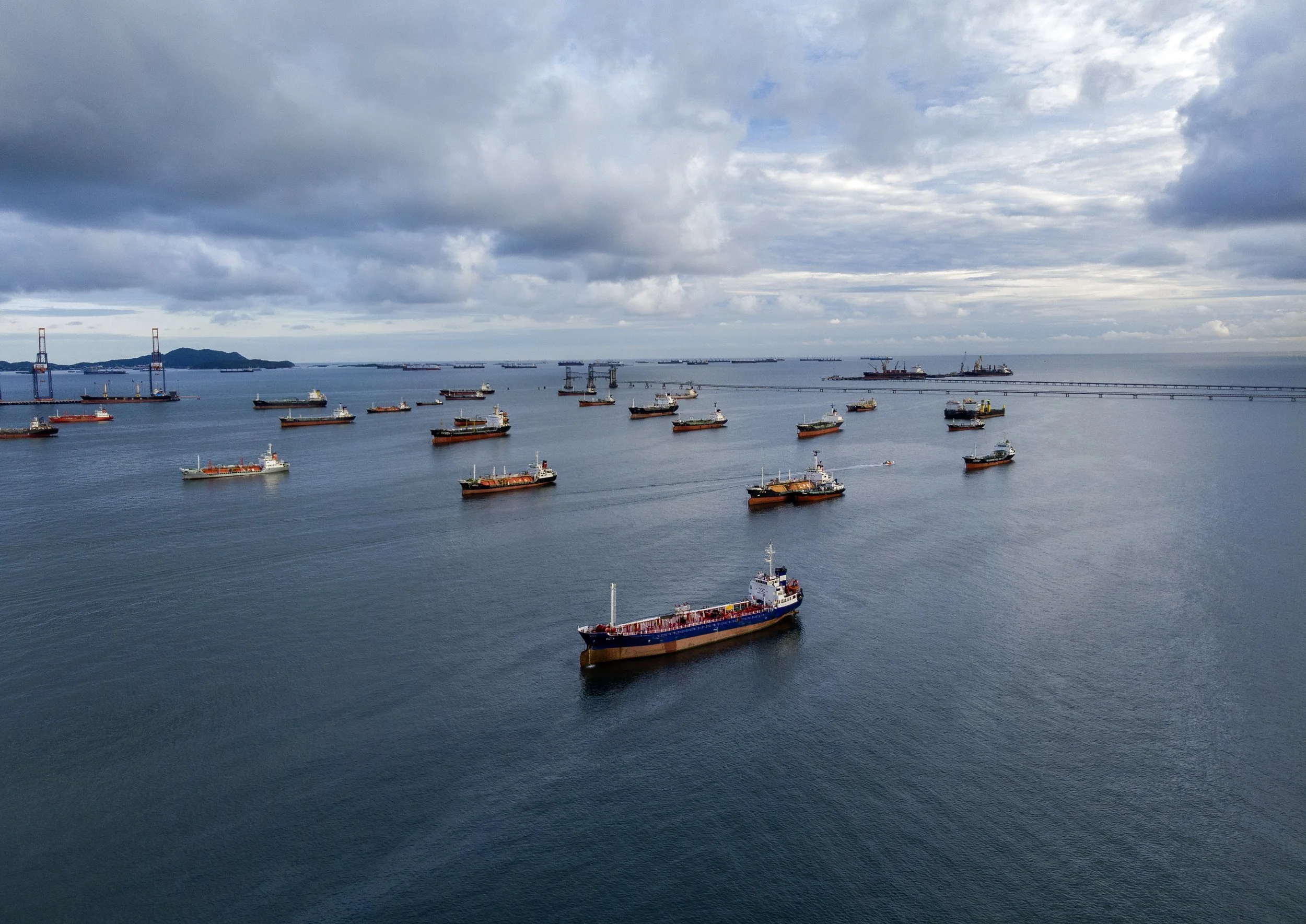
The Strait of Hormuz is among the world's most critical energy chokepoints: in 2024 it carried around 20 million barrels per day of oil—equivalent to roughly one-fifth of global petroleum liquids consumption—and approximately one-fifth of global liquefied natural gas (LNG) trade, primarily from Qatar. Conflict that raises transit risk through the strait spreads rapidly through oil prices, shipping insurance, food and fuel costs, investment decisions, and public budgets.
The World Bank's April 2026 Economic Update for the MENAAP (Middle East, North Africa, Afghanistan and Pakistan) region projected that growth, excluding Iran, would slow from 4% in 2025 to 1.8% in 2026—a downgrade of 2.4 percentage points relative to January projections—with GCC growth revised down by 3.1 percentage points to just 1.3%. In the event of severe damage to critical energy infrastructure, the Bank's April 2026 Commodity Markets Outlook warned that Brent crude prices could average as high as US$115 per barrel in 2026. For oil-import-dependent economies, such a scenario would represent not only a price shock but a compounded fiscal, monetary, and social crisis.
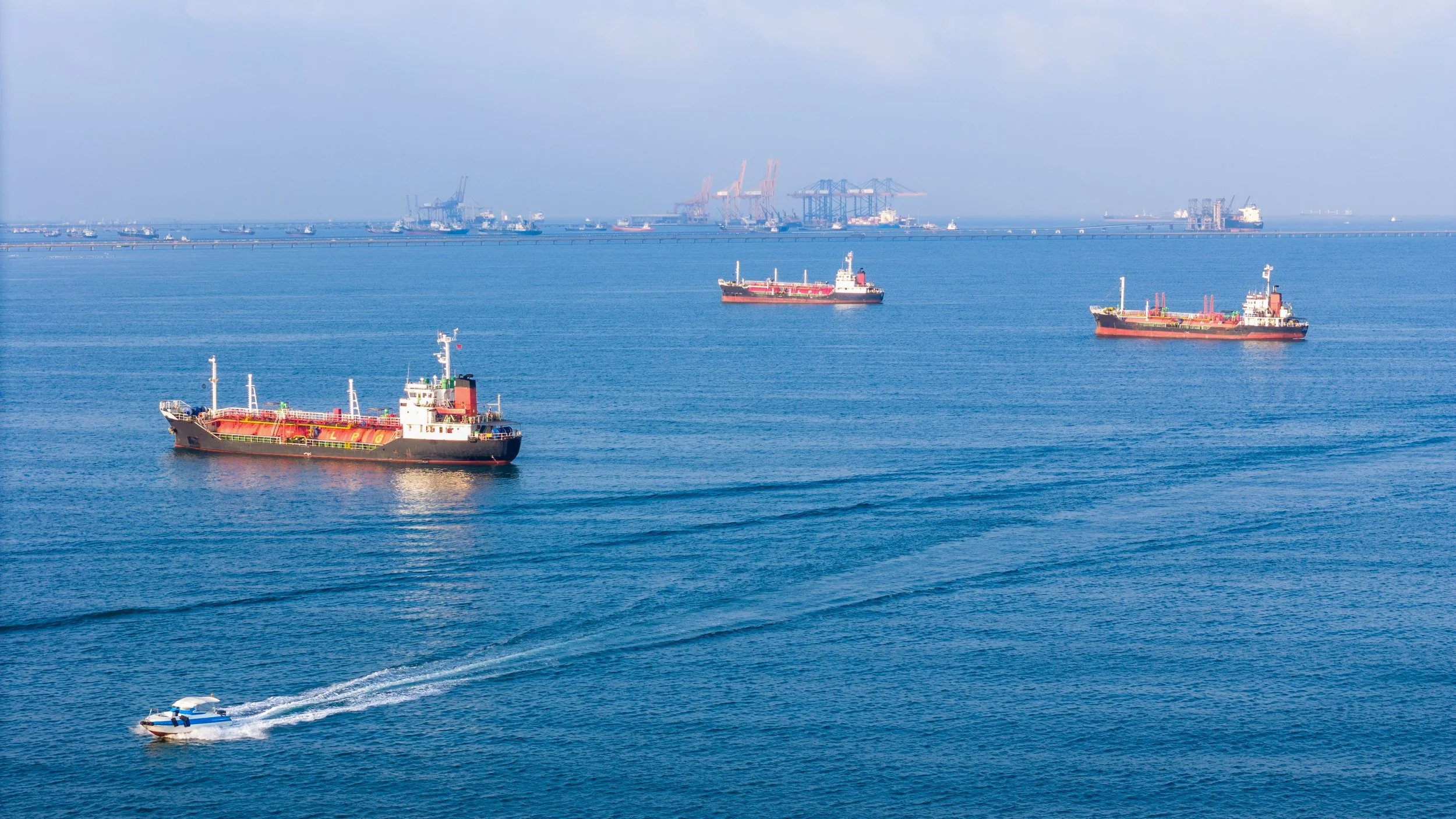
Saudi and Emirati pipelines can bypass only 3.5–5.5 million barrels of oil per day—roughly a quarter of normal Strait of Hormuz throughput—leaving most Gulf producers with no viable alternative route.
Oil Exporters: Fiscal Cushion, Strategic Strain
The most important question for oil exporters is not whether they absorb the shock, as most will, but whether they use it to accelerate diversification or delay difficult reforms.
Higher oil prices can cushion public budgets and support state investment, though the distribution of windfall gains is uneven: Saudi Arabia's fiscal breakeven oil price is estimated at US$94, well above the US$69 range at which Brent traded through much of 2025, meaning the Kingdom entered the Iran war shock already running a structural budget deficit. Producers operating closer to their OPEC+ quota ceilings may see flatter revenue growth than smaller producers such as Oman, or than North African exporters less constrained by collective output limits.
Gulf diversification strategies have progressed well beyond early phases, now encompassing industrial policy, logistics corridors, digital infrastructure, advanced manufacturing, artificial intelligence, mining, clean energy, and global capital deployment through sovereign wealth funds (SWFs)—models that remain predominantly state-led and capital-intensive. GCC SWFs collectively managed over US$5 trillion in assets as of early 2025—with Saudi Arabia's Public Investment Fund at US$1.15 trillion and Abu Dhabi's ADIA at US$1.11 trillion.
These strategies require long time horizons, stable regional perceptions, credible institutional execution, and so they rely upon consistent delivery on industrial, labor market, and private-sector reform commitments rather than announcement-driven policy cycles, as well as predictable financing conditions. War undermines each of these. Foreign investors in non-oil sectors are also more risk-averse than those in hydrocarbons; war-driven uncertainty falls disproportionately on precisely the sectors that diversification depends upon, among them tourism, technology, advanced manufacturing. If heightened regional instability persists, priorities may shift toward security, subsidies, liquidity preservation, and domestic stabilization—deferring precisely the structural reforms that matter most.
War-driven uncertainty falls disproportionately on precisely the sectors that diversification depends upon
The OPEC Drift Matters Beyond Oil
The UAE's decision to exit OPEC and OPEC+, effective May 1, 2026, adds a deeper layer to the region’s diversification challenge. The departure weakens the producer group's collective influence and reflects Abu Dhabi's desire for more flexibility to monetize expanded production capacity. The UAE has long favored more lenient quota arrangements, and its divergence from Saudi Arabia on this point has been a recurring source of tension. The Iran war has accelerated a strategic drift that was already underway.
The primary driver is economic and pragmatic: the UAE seeks to maximize production volume when prices are elevated, deploying the resulting revenues into its long-term infrastructure, clean energy, and technology ambitions. Three structural asymmetries reinforce this commercial logic.
First, ADNOC has committed approximately US$150 billion to reach a 5-million-barrels-per-day (bpd) production target by 2027—a level structurally incompatible with OPEC+ quota discipline, which had been forcing the UAE to produce roughly 1 million bpd below its sustainable capacity of 4.5–5 million bpd; at current prices, this quota-induced constraint imposed an annual opportunity cost estimated at US$50–70 billion.
Second, the UAE's fiscal breakeven oil price is around US$50 per barrel—well below the regional median above US$80 and far below Saudi Arabia's US$96–108—meaning a quota framework calibrated to protect higher-cost producers effectively transfers fiscal burden from states that need price support to one that does not.
Third, Abu Dhabi's Fujairah bypass pipeline allows crude exports without Strait of Hormuz transit exposure, further reducing the UAE's vulnerability to the very chokepoint risk that constrains other Gulf producers.
Following its exit, ADNOC accelerated a US$55 billion upstream and downstream investment program spanning 2026–2028. The UAE is also emerging as a preferred bilateral supplier for major Asian importers including India, China, South Korea, and Japan, which collectively represent the world's largest pool of crude import demand.
This signals a broader drift within the regional political economy. For decades, Gulf producers balanced national ambition with collective management of scarcity; the UAE's move suggests that some producers now see greater value in unilateral flexibility than in shared discipline. If OPEC cohesion weakens as a result, oil prices and the revenues that fund economic diversification may become more volatile. That volatility simultaneously strengthens the case for diversification as an economic survival strategy while making the fiscal basis for funding it less reliable.
Abu Dhabi’s oil strategy is aligned with a clear national objective: monetize hydrocarbons while demand remains strong, then redeploy capital into future sectors, including logistics, finance, renewables, artificial intelligence, and global infrastructure. Saudi Arabia's approach is different in scale and political economy. Vision 2030 relies on transforming the domestic economy, building new sectors, and reshaping the labor market, while maintaining oil-market leadership. These are not incompatible models—both rely on state-led capital deployment and long-horizon sector building—but they reflect a deepening asymmetry: as the UAE captures unconstrained upside, Saudi Arabia absorbs a disproportionate share of the collective discipline burden, quietly undermining the producer coordination framework that both countries' diversification strategies rely on for long-term fiscal predictability.
As the UAE captures unconstrained upside, Saudi Arabia absorbs a disproportionate share of the collective discipline burden
Energy Importers: Harsher Arithmetic, Different Opportunity
Oil-import-dependent economies face a harsher arithmetic. What Egypt, Jordan, and Morocco share is a common structural exposure: none produces meaningful quantities of oil or gas, all rely heavily on energy imports priced in dollars, and all depend on external revenue streams—tourism, remittances, and foreign direct investment—that are acutely sensitive to regional instability. When energy prices rise and regional confidence falters simultaneously, these economies are hit on both the cost and the income side at once.
The scale of war-related economic damage is well documented. The World Bank has estimated that GDP per capita in conflict-affected MENA economies could have been 45% higher on average, measured seven years after the onset of conflict. These economies should not be seen through the lens of vulnerability alone, however. Their diversification prospects depend less on megaprojects and more on policy sequencing—working with existing structural strengths and near-term reform levers that are more accessible amid regional disruption and more immediately protective.
Morocco's position illustrates the point most clearly. The country has become the leading finished vehicle exporter to the European Union, surpassing China, Japan, and India, with automotive exports reaching US$13.28 billion in 2024. With over 40% of electricity already generated from renewables and a target of 52% by 2030, and with aerospace exports projected to double to US$4 billion by 2030, Morocco has a diversification platform that is operationally active. The current imperative is not to build something new but to protect what exists: sustaining investor confidence in the European export corridor and accelerating renewable deployment before financing conditions tighten further.
Egypt faces a more acute form of the same pressure. Suez Canal receipts, depressed by Red Sea disruptions, fell by approximately US$6 billion in 2024 relative to 2023 and remained suppressed into 2025—widening an already-elevated current account deficit just as fuel import costs rise. The most strategically valuable response is also the most direct: accelerating domestic solar and wind buildout. Egypt accelerated its clean energy target in April 2026, from 42% by 2030 to 45% by 2028, and recent auction prices for solar energy have fallen to approximately US$0.02 per kilowatt-hour—among the lowest in the world. Reducing the import bill through domestic generation simultaneously stabilizes the currency, improves the fiscal position, and creates an investable infrastructure pipeline.
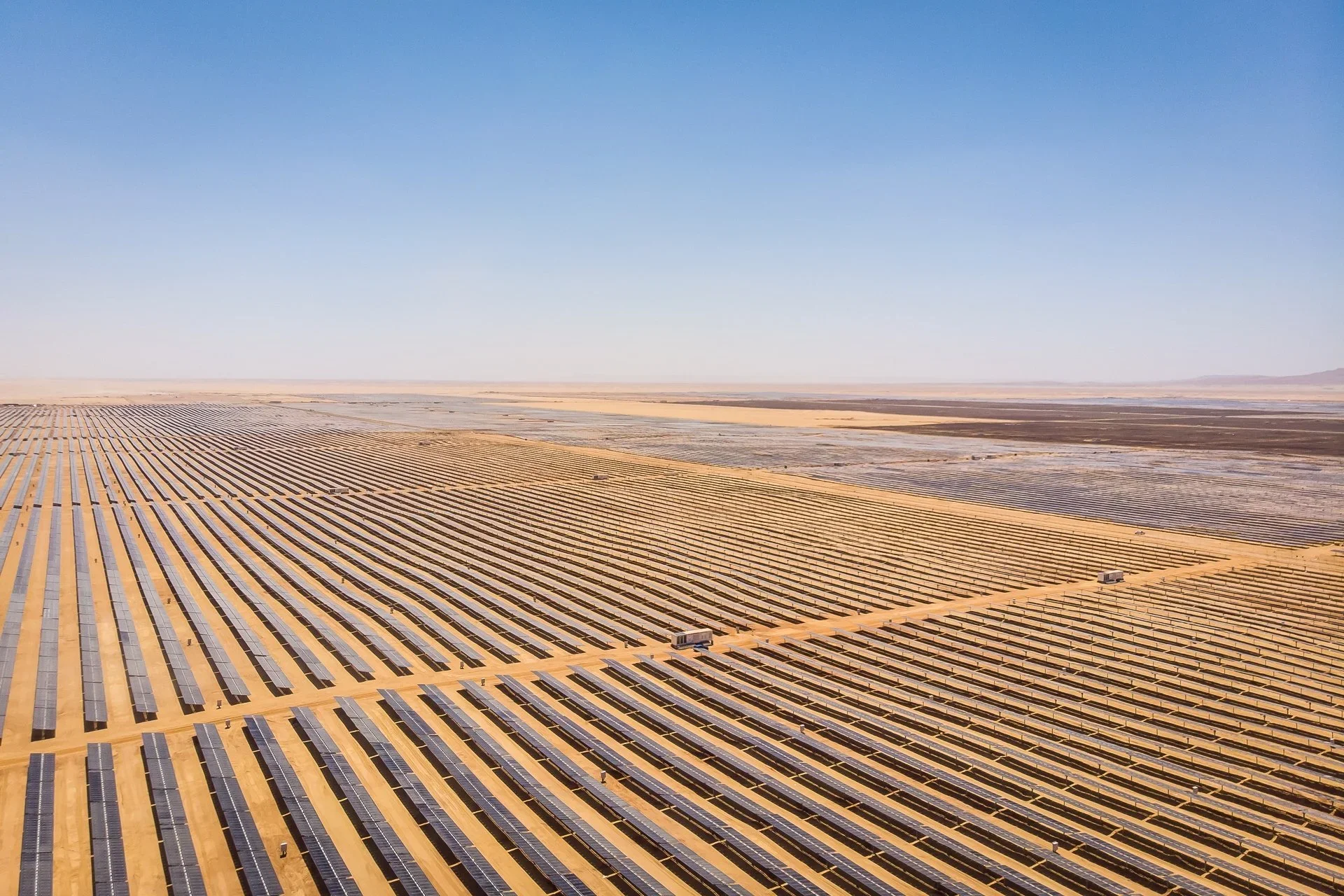
Aerial view of Benban Solar Plants, Scatec Egypt. Egypt accelerated its clean energy target in April 2026, from 42% by 2030 to 45% by 2028. Photo: Africa 50.
Jordan faces a structural energy crisis that the war has compounded, but its leverage point is regional connectivity. Israel's abrupt curtailment of gas from the Leviathan and Karish fields—which had supplied more than 85% of Jordan's imported gas and approximately 68% of its electricity generation—exposed the risks of concentrated bilateral energy dependence. Given that it imports almost 90% of its energy needs, Jordan cannot build its way out of exposure in the near term, but it can deepen its existing electricity interconnection with Egypt and Iraq. The Jordan–Egypt link, a 400-kilovolt submarine cable with 550-megawatt capacity operating since 1999, has a planned reinforcement of two additional cables of 1,100 megawatts each; Jordan has also been supplying electricity to Iraq's Rutba region through its 132-kilovolt interconnection line since March 2024. These corridors reduce import costs and transit dependence without requiring large domestic capital outlays.
Across all three countries, the priority is the same: greater urgency in executing reforms already underway, and protecting the reform credibility that makes future investment possible.
Clean Energy Is Now a Resilience Strategy
For both country groups, clean energy is central to diversification agendas. For oil exporters, renewables and low-carbon industry reduce domestic consumption of fossil fuels, freeing more hydrocarbons for export while building new industrial capabilities in hydrogen, critical minerals processing, clean fuels, and grid technologies. For importers, renewable energy is a macroeconomic resilience tool: solar, wind, storage, and regional electricity trade reduce exposure to imported fuel costs, improve balance-of-payments stability, and create domestic investment pipelines.
The scale of the regional opportunity is substantial. IRENA has confirmed that at less than US$0.02 per kilowatt-hour, solar photovoltaic is now the least-cost option for power production across the GCC, outcompeting natural gas, LNG, oil, coal, and nuclear power. Saudi Arabia's Vision 2030 targets 50% renewable electricity by 2030, requiring approximately US$100 billion in investment; the UAE targets 44% clean energy by 2050 under its Energy Strategy. Yet, despite abundant renewable sources and some of the world’s lowest solar costs, renewables accounted for less than 5% of total electricity generation in most GCC countries as of 2024—a gap between resource potential and deployment that is itself the strategic opportunity.
The risk is that governments treat energy security and energy transition as competing priorities when they are, in fact, increasingly the same priority. A country dependent on imported fuel is vulnerable not only to climate transition risk but to war, shipping disruption, currency pressure, and inflation. A country dependent on hydrocarbon exports is not only vulnerable to the global energy transition but to producer fragmentation, demand uncertainty, and the erosion of collective market power. Clean energy and broader economic diversification are not luxury reforms in either context. They are insurance against a range of risks that recent events have made more visible.
Clean energy and broader economic diversification are not luxury reforms in either context. They are insurance against a range of risks that recent events have made more visible
The Central Test Is Resilience
The war has made one policy implication clear: an economic diversification strategy that delivers growth but cannot withstand geopolitical shock fails its most important test. For oil exporters, that means resisting the temptation to treat higher oil revenues as a substitute for reform. Rather, they should use the fiscal space to deepen private-sector participation, raise labor productivity, and build the institutional capacity to deliver reform consistently rather than in bursts.
For energy importers, it means prioritizing the reforms that most directly reduce external vulnerability: renewable energy deployment to reduce costly fuel imports, export competitiveness to earn foreign currency, investment-climate reform to attract private capital, and targeted social protection to cushion households from recurring price shocks.
The conflict may ultimately produce two Middle Easts: one in which narrowing horizons and rising risk premiums push governments back into defensive economic management, and one in which disruption clarifies the strategic value of reform and accelerates what was already necessary. The dividing line will not be oil wealth. It will be institutional capacity—the ability to convert geopolitical shock into policy focus.
Diversification must be understood as a long-term institutional commitment, not a cyclical adjustment, because non-hydrocarbon sectors depend on stability too. Mobile capital in technology, artificial intelligence, and clean infrastructure tends to return more slowly after conflict than investment tied to fossil fuel assets. Its case strengthens, not weakens, under geopolitical pressure.
The region's diversification agenda has long been framed as preparation for a post-oil future. That framing is now too narrow. Diversification is equally preparation for a disorderly present. Resilience is no longer a secondary dividend of reform. It is the measure of reform itself.
Racha Helwa, PhD is a senior economist specializing in economic policy, macroeconomic reforms, and sustainable development in the Middle East, North Africa and GCC region. She has advised governments, international organizations, private-sector stakeholders, and think tanks on macroeconomic reform, investment, sustainability, and inclusive growth.