


The Perils of ‘Ghost Water’
By Peter Schwartzstein
1 December 2025
Desalination is all the rage in the Middle East. History provides a cautionary tale.
At the beginning of the 20th century, the UK produced almost none of its own timber. Having deforested all but 5 percent of the country, Britons had come to rely on much bigger, much more densely forested lands for wood, such as Canada and the Nordic states. As a consequence, it was, for a time, able to avoid the pitfalls of that mismanagement, even as its timber requirements surged.
But the thing about hidden ecological footprints, or ‘ghost acres’ as scholars term this arrangement, is that they’re generally only workable while the going is good, as the British also soon discovered. When WWI began, the UK was suddenly severed from its timber supply, the ghost acres having obscured its vulnerabilities and natural chokepoints. Had the war dragged on much longer than it did, not even the energetic efforts of local foresters, many of whom cut down much of what remained of British woodland between 1914 and 1918, would have been enough to sustain the all-important coal sector and perhaps even the war effort itself.
A similar thinking could be applied to the Middle Eastern water sector, a growing share of which is dependent on what might be referred to as ‘ghost water.’’ With demand up and already meager natural resources mismanaged way down, much of the region is growing ever-more enamored of desalination technology as a supposed means of subverting the natural limitations of their lands. The statistics tell a small part of the story.
Saudi Arabia has become the largest desalinator in the world, generating about a fifth of the global total. The Gulf states are collectively desalinating an annual volume of water roughly equal to that of the Euphrates River (though that statistic might say as much about the once-great waterway’s insipid flow as it does impressive Gulf capacity). Such is the attractiveness of Emirati and Israeli technology that those states are even deploying desalination as a soft power instrument of a sort. In the summer of 2025, the UAE lent drought-battered Cyprus a number of portable desalination units for free.
However, the thing about desalination is that, like a dependence on ghost acres, its strategic weaknesses, ecological costs, and long-term policy perils may only become fully apparent when the proverbial tide goes out. The more the region embraces desalination without regard for the technology’s vulnerabilities, the greater the chance that its inhabitants will one day end up in an even thirstier bind.

More than half of the world’s largest desalination plants draw from the Gulf, an impressive technological feat but one that, in ecological terms, is playing out in the worst of locations
Flashing neon targets?
The first of these risks is centered on large-scale desalination facilities’ susceptibility to attack, and all in a region that seems destined to remain at least somewhat volatile for the foreseeable future. By rendering water access largely contingent on the smooth operation of a few bits of mega infrastructure, as opposed to more diffuse ‘traditional’ water systems, states are concentrating water resources to an unprecedented extent. That seems unwise at a time in which norms against the targeting of civilian infrastructure have well and truly broken down. It may be especially ill-advised during a period when water is being weaponized more than any point in recent history, especially within the region itself.
Though water isn’t a classic commodity, Middle Eastern states are arguably going against the global grain in this approach, clustering the most vital of resources at the same time as Western and other countries are trying to diversify or ‘de-risk’ their supply chains.
Nor is any of this risk of direct or collateral conflict damage purely theoretical. Since 2016, the desalination plant at Ashkelon, which produces about 15% of Israel’s drinking water, has been periodically stilled by sewage from nearby Gaza. Even before the most recent war, years of accumulated conflict damage, mismanagement, and stifled humanitarian access had left the Strip’s wastewater infrastructure in no state to provide for residents’ needs. In 2022, the Houthis targeted and struck a Saudi desalination facility on the Red Sea. During the Iran-Israel war of June 2025, Gulf State officials fretted about the consequences of an IDF strike on Iran’s coastal nuclear reactor at Bushehr. Though that eventuality never came to pass, the possibility that radioactive waste might contaminate the very sea from which the Emiratis, Saudis, Qataris, and others derive most of their desalinated water brought the stakes into sharp relief.
As Spain found during its near-countrywide 2025 blackout, it does not even require hostile action to jeopardize desalination operations. Hundreds of thousands of Spaniards were left without water as plants, pumps, and other infrastructure ground to a halt. The very fact that the Gulf states have limited capacity to store desalinated water, with Qatar able to hold only a week’s worth of water, merely magnifies the risk.
In short, the enhanced security that desalination can bring in the form of improved water access and perhaps reduced dependence on contested transboundary resources may come at the expense of dangerous new weaknesses. In the Gulf, desalination and power infrastructure are generally integrated in ways that may create new dependencies.

The Jebel Ali Power and Desalination Complex in Dubai, one of the world’s largest integrated facilities of its kind, supplying a major share of the emirate’s electricity and drinking water. Photo Credit: National Geographic.
Salting the sea
The second risk is environmental. Much like ghost acres, which contributed to significant deforestation and even species loss in supplier states, the deployment of desalination at scale is apt to sully marine ecosystems in ways that may ultimately blow back on the dependents themselves. In the case of the Middle East, which is bounded by some of the world’s most fragile and fastest-warming seas, the contours of the crisis are already clear. The largely enclosed Gulf is becoming ever saltier amid more extreme heat, which is fueling fiercer evaporation, and the dumping of hypersaline brine residue by desalination facilities. Those impacts are, in turn, hiking desalination’s already weighty energy needs, which can amount to half of the technology’s total costs. Studies suggest that water remains within the Gulf for an average of one to five years before it’s ‘recycled’ through the Straits of Hormuz. It may be more than a hundred years in the case of some Eastern Mediterranean waters.
In one of those bitterly ironic twists, desalination’s growing carbon footprint may inadvertently fuel some of the very same warming that is deepening drought and hastening the hunt for additional water resources across the Middle East.
All the while, desalination units in the Gulf and along the Red Sea and Eastern Mediterranean, both of which are also among the fastest-warming and salinizing global seas, face more potentially turbine-cogging algal blooms. These ‘red tides’ are mushrooming in the Gulf’s bathtub-like waters due to agricultural waste dumping and marine heatwaves. For the likes of Qatar, Bahrain, and Kuwait, which depend on desalination to meet almost 100 percent of drinking water needs and which have no other sea access, the threat is doubly acute.
More than half of the world’s largest desalination plants draw from the Gulf, an impressive technological feat but one that, in ecological terms, is playing out in the worst of locations, given the sea’s fragility.
As generally large-scale,
‘techno-optimist' undertakings, desalination schemes dovetail with many states’ fixation on flashy, eye-catching megaprojects, or ‘megaprojectivitis,' as Pakistani social scientist Daanish Mustafa put it
A Policy Mirage
The final risk is more nebulous but no less fearsome in the long run. Because while desalination undoubtedly will account for a growing share of the region’s water, the role ascribed to it by sometimes-giddy politicians, especially beyond the energy-rich, water-poor Gulf states, is neither compatible with the technology’s capacities nor necessarily beneficial for national water plans in general.
The more that states add ‘new’ resources to their water mix, the less incentivized they are to do the painful but necessary overhauls of their existing ones––patching leaky pipes (which is expensive and politically unsatisfying), removing water subsidies (which is naturally unpopular), and enforcing conservation practices (which can encroach on the economic interests of connected elites), among other measures.
As generally large-scale, ‘techno-optimist’ undertakings, desalination schemes dovetail with many states’ fixation on flashy, eye-catching megaprojects, or ‘megaprojectivitis,’ as Pakistani social scientist Daanish Mustafa put it, instead of the many incremental improvements that are generally most beneficial in bolstering water access.
For example, Jordan recently took a big step closer to fulfilling its own desalination ambitions, which will boost water supply by about 25 percent. That’s all well and good for one of the world’s most water-impoverished countries. However, the project follows a rash of others designed to supplement supply, rather than reduce demand and losses, which still account for roughly 50% of all piped water, despite significant targeted donor assistance.
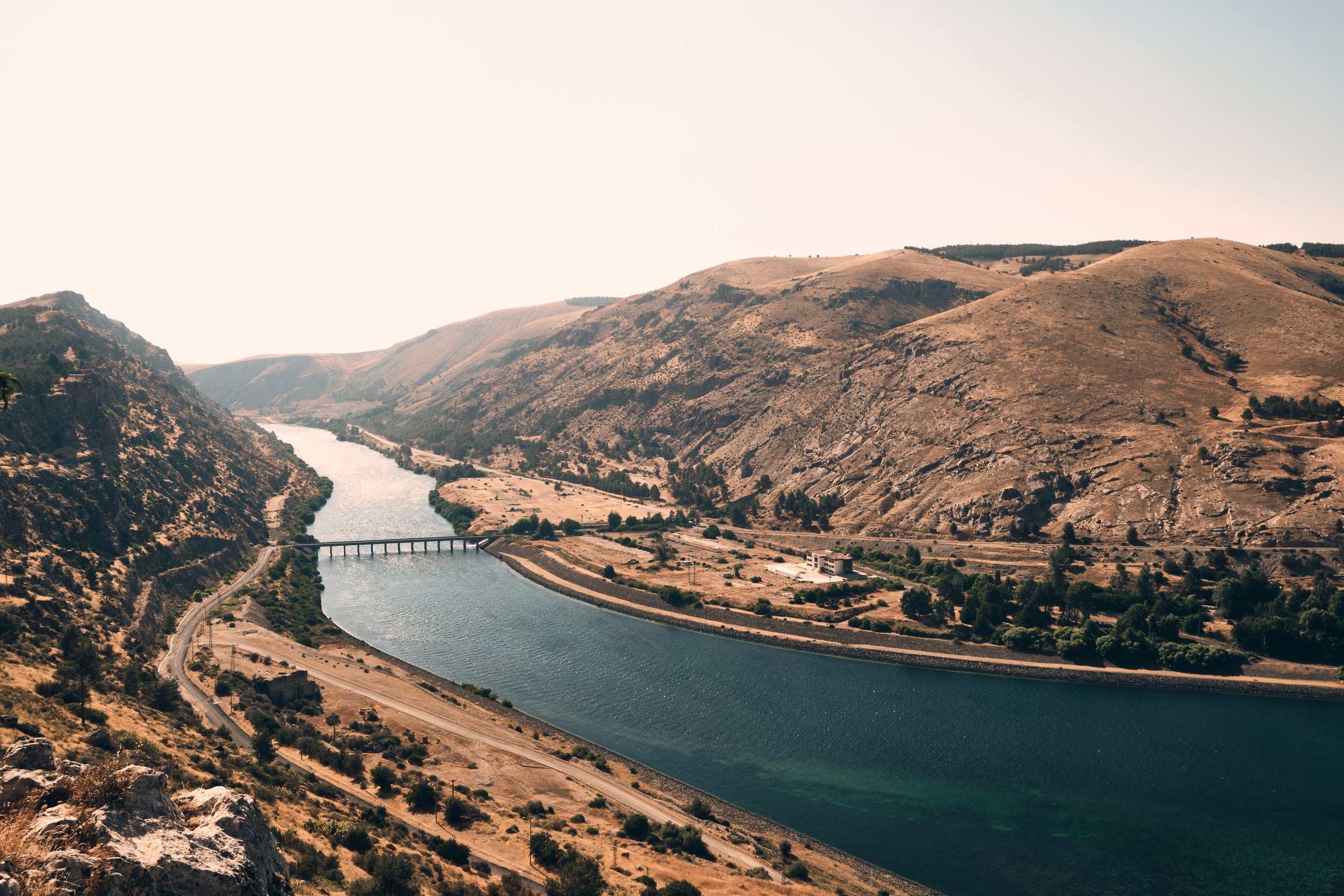
The Gulf states are collectively desalinating an annual volume of water roughly equal to that of the Euphrates River.
Moreover, the longer that parts of the region remain in thrall to magical thinking, the ruder the awakening when states eventually appreciate desalination’s potential perils. In years of conversations across the region, senior officials among the non-petrostates have frequently invoked desalination as something of a panacea, an ‘aqua white knight’ that will ride to their rescue when or if climate change and population growth pitch them deeper into water bankruptcy. “Desalination. Desalination. Desalination,” an Egyptian minister once pithily told me when asked how his country would manage its looming water deficit. The question that these statesmen seldom, if ever, answer is how this technology will address some of their most jarring shortages, which are generally agricultural and for which desalinated water has proven too expensive almost everywhere in the world? And, more particularly, how on Earth they’ll pay for a kind of water that’s much cheaper than it previously was but that still comes with a much greater price tag than that associated with other sources if it’s ever generated on anything like the proposed scale?
The Eastern Mediterranean and the Middle East can lay claim to having invented some of the first forms of desalination, the Minoans and Persians among those to have invested heavily in means of eking more water from insufficiently well-resourced lands some thousands of years ago. Parts of the wider region continue to lead exciting new technological innovations. The Gulf states and Israel have been at the forefront of efforts to make desalination less energy intensive, while also weaning many of their facilities onto electricity. But with water needs set to far outstrip what even a projected tripling of the volume of desalinated water in the region can provide over the next decade, those advancements are not the silver bullet many regional politicians imply.
The reality here, as most water experts have said for decades, is that piecemeal, ‘unsexy’ actions such as enhanced grey water re-use and revamped water delivery systems, are likely a much bigger part of the solution.
Post-WWI UK certainly took some lessons from its brush with timber disaster. Though still among the least forested countries in Europe, its volume of woodland has almost tripled since that pre-war low, MPs creating the Forestry Commission in 1919 with a mandate to put the UK on a more sustainable and strategic footing. The hope is that it won’t take anything as dramatic as significant conflict or environmental breakdown to impress upon Middle Eastern states the perils of pinning their hopes on ‘ghost’ resources.
Peter Schwartzstein is an environmental journalist and researcher.
