

The MENA Region:
An Emerging Focal Point in China’s Green Hydrogen Ambitions
By Mathias Larsen
21 December 2025
As China prepares to launch its next Five-Year economic plan, scheduled for March 2026, one technology is emerging as a clear strategic priority: green hydrogen. While solar, wind, and electric vehicles remain central to global decarbonization, China is betting that green hydrogen will define the next era of clean energy leadership. Crucially, this push is not confined to China’s domestic market. As with other green supply chains, China is already extending its green hydrogen ambitions overseas — a trend set to accelerate. In this context, the Middle East and North Africa (MENA) region is emerging as a focal point for Chinese investment and industrial expansion, supporting the positioning of the region as a global green hydrogen hub. With a supportive industrial environment and direct access to European markets, Chinese companies’ pipeline of project under development in the MENA region is growing. While most projects are in the early stages, the trend is clear.
At home, China is rapidly ramping up green hydrogen production and infrastructure. Major industrial clusters in provinces like Hebei and Inner Mongolia in the country’s North East, and Qinghai in central China, are becoming testing grounds for electrolyzer deployment, hydrogen storage, and fuel cell applications. Already the world leader in terms of capacity, the Chinese government has set ambitious targets, aiming for rapid production capacity growth towards 2030, supported by government subsidies, large-scale pilot production projects, and state-backed investment in technology innovation. Domestic projects are focused not only on supply for industrial and transportation use, but also on creating an integrated ecosystem of research, manufacturing, and grid integration, ensuring that China develops both the technical expertise and production scale needed to compete globally. Similar to China’s dominance in other clean technologies, this policy is motivated by the wish to lead the world in this new sector. Reflecting the current and future lead of China, the country with the second largest pipeline of projects underway is Saudi Arabia, with a project capacity representing a third of China’s.
China is betting that green hydrogen will define the next era
of clean energy leadership

The competitive advantage of the MENA region
Green hydrogen is particularly suited to hard-to-abate sectors, including heavy industry, shipping, and aviation, where electrification is challenging. From supporting the industry at home, China is progressively extending this push beyond its borders. In that context, the MENA region offers a unique combination of advantages: vast solar resources, low-cost land, and existing fossil fuel infrastructure that can, in certain cases, be repurposed for hydrogen production, storage, and transportation. And while the region is known for its scarce water resources, energy efficient desalination is emerging as a mitigating solution. For Chinese companies, these conditions present an unparalleled opportunity to achieve scale and cost efficiency.
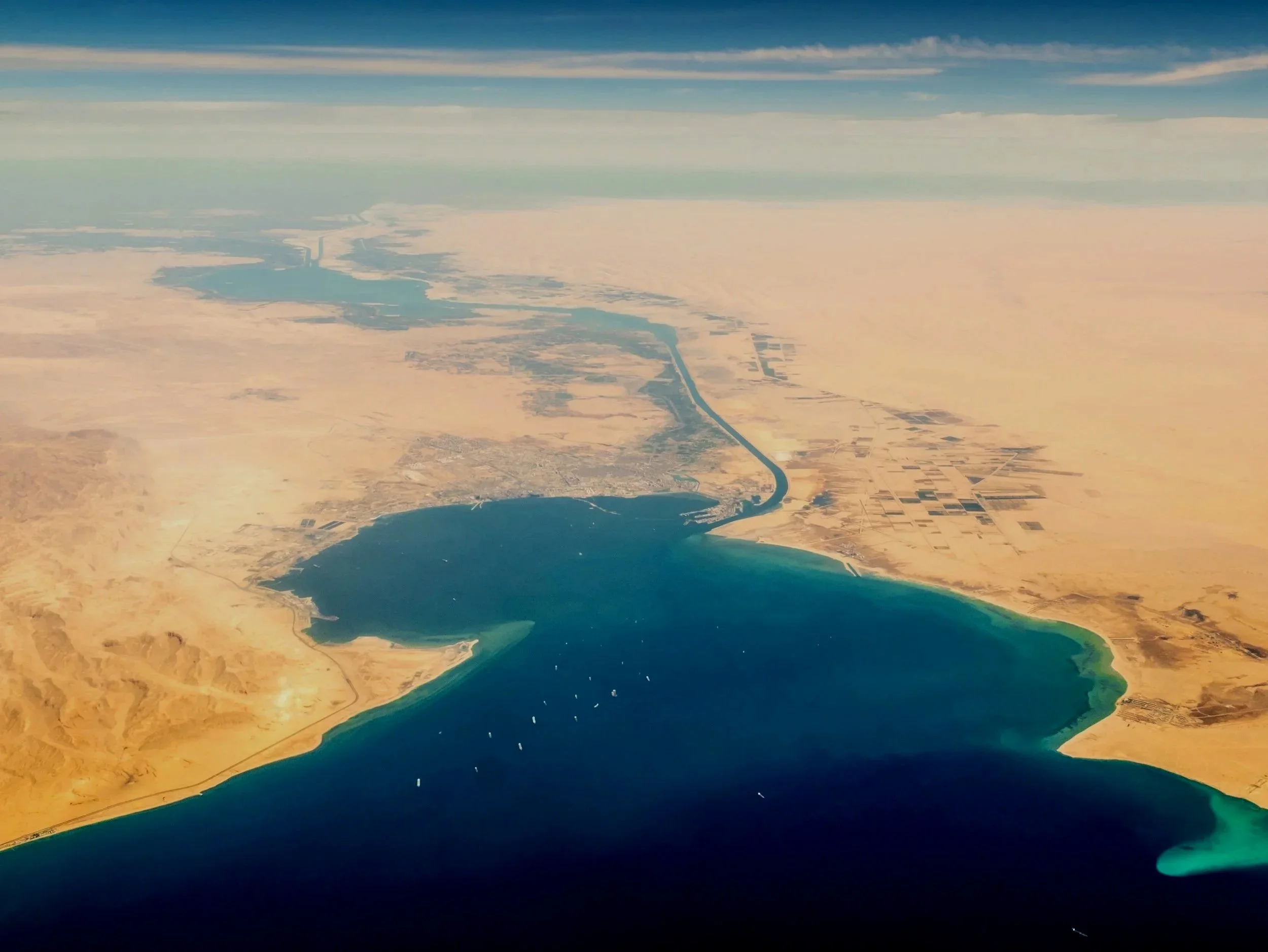
Data from emerging projects shows that China aims to establish a significant footprint in MENA. These projects highlight a growing ecosystem of joint projects between Chinese and local partners across the MENA region. In Egypt, for example, China Energy signed a framework agreement in 2023 to invest USD 6.75 billion in a project for the Suez Canal Economic Zone. The project aims to produce 210,000 tonnes of hydrogen and 1.2 million tonnes of green ammonia annually. Furthermore, in Morocco, a new green hydrogen project would be partially funded by Energy China International Construction Group, with a Memorandum of Understanding (MoU) signed in 2023. Combining ammonia, green hydrogen, and renewables, the 1.4 million tonnes of planned capacity would translate into an approximately USD 5 billion investment. As another large-scale example, Jordan’s Ministry of Energy and Mineral Resources is planning a USD 1.16 billion green hydrogen and ammonia project with China’s UEG Green Hydrogen Development. The project is still at very early stage, as the two parties signed an MoU in September 2025.
The region MENA region could host the first wave of industrial-scale hydrogen projects shaped by Chinese technology and standards.
A window of opportunity for the region
With a pipeline of USD 22.74 billion worth of Chinese green hydrogen investments, this emerging phenomenon constitutes an opportunity for MENA countries to use Chinese investments to both develop their industries and drive a green transition. Specifically, MENA countries benefit from technology transfer, infrastructure development, and industrial growth. Local governments gain access to Chinese expertise and financing, enabling them to become exporters of green hydrogen and green ammonia to Europe and Asia, and potentially reshaping the region’s energy economy for decades.
Recent data yet to be published by the Net Zero Industrial Policy Lab underscores that this phenomenon is emerging. Out of a total of 24 Chinese green hydrogen projects underway globally, 13 are set to take place in the MENA region. Taken together, these projects indicate a coordinated strategy steered by Beijing. Chinese firms are signing MoUs and cooperation agreements with host countries and international partners, laying the groundwork for industrial-scale production. As these projects transition from planning to operational stages, capacity will increase sharply, making the MENA region a global hub of green hydrogen production.
China’s emerging global role
Chinese companies are positioned to dominate the manufacturing of key green hydrogen components, using the MENA region as a global stepping stone to accessing global markets. This covers a range of green hydrogen industrial components, including electrolyzers, storage tanks, and transport solutions. Conveniently, green hydrogen complements its existing solar and wind projects in the MENA region, enabling seasonal energy storage, grid balancing, and decarbonization of industries that cannot rely solely on electricity. By exporting capital, technology, and industrial capability to MENA, China is extending its global leadership in the most important clean technologies, from wind and solar to green hydrogen. If all projects go ahead at the announced scale, this outward push reframes MENA as both a green hydrogen supplier with half of China’s overseas green hydrogen projects and as a strategic partner within China’s broader global green energy strategy.
This trend has significant implications for global energy dynamics, both in the short and long term. As Chinese investment scales up, production costs may fall - partially driven by falling costs of renewables - making green hydrogen more competitive, ultimately, accelerating global demand. For the MENA region, hosting Chinese-led green hydrogen projects, thereby, both advances China’s global role as a central energy supplier and could become an industrial driver for catalyzing economic diversification, technological development, and industrial modernization, creating a new low-carbon growth pathway.
Conversely, such investments further deepen the MENA region’s dependency on Beijing for its green transition through technology, standards, and finance. With such dependence, naturally comes a vulnerability to the MENA region, especially in the context of rising geopolitical rivalry between Western countries and China. A ban by the European Union on the import of green hydrogen manufactured in Chinese partnered projects, for example, would present a major risk to partner countries, and could hamstring their market access.
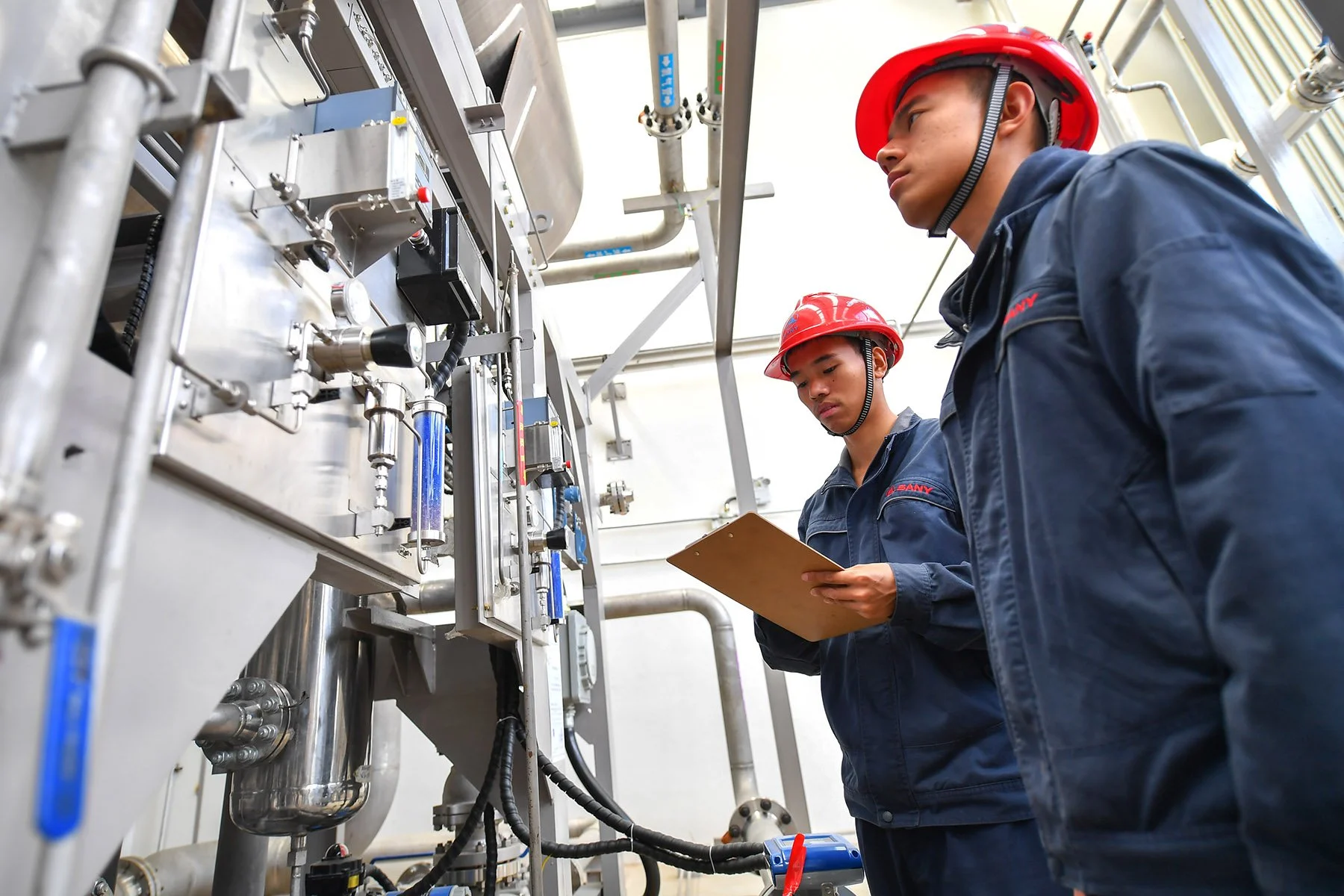
China’s domestic hydrogen infrastructure reflects the industrial capabilities and operational experience that increasingly underpin its outward green hydrogen engagement. Photo: Xinhua
A budding trend set to scale up
The investments nonetheless reflect a clear strategic pattern: MENA is central to China’s green hydrogen ambitions. The region’s natural advantages, combined with the potential repurposing of existing energy infrastructure, position it as a key testing ground for large-scale hydrogen deployment. While export-oriented projects that have reached final investment decision to date are largely financed by European capital and oriented toward European offtakers, China’s growing involvement in project development, equipment manufacturing, and early-stage partnerships suggests that MENA could host the first wave of industrial-scale hydrogen projects shaped by Chinese technology and standards. If these projects progress from planning to operation at scale, they may lay the groundwork for a future low-carbon supply chain in which Chinese firms play a central role.
Looking ahead, this trend is poised to scale. Yet, as that process takes place, we may see a return of some of the geopolitical dynamics associated with the fossil fuel age. While renewable energy alleviates many supply constraints because it is traded primarily as equipment rather than fuel, green hydrogen is itself a fuel, raising the possibility of more concentrated and potentially obstructable supply chains.
For global policymakers, investors, and energy stakeholders, the message is clear: beyond China’s domestic market, the MENA region is becoming a focal point for the internationalization of China’s green hydrogen industry. While this evolution may give rise to some of the geopolitical ramifications discussed here, their scope and intensity will ultimately depend on how projects scale, mature, and integrate into global markets over the coming decade.
Mathias Larsen is a Senior Policy Fellow at the Global School of Sustainability at LSE, where he leads the work on China.
