The Future of
Agriculture in the MENA Region:
Navigating Food Security and
Climate Resilience
An Analysis Paper by the Carboun Institute’s Climate Resilience Program
The Future of Agriculture in the MENA Region:
Navigating Food Security and Climate Resilience
Author: Jamila El Mir
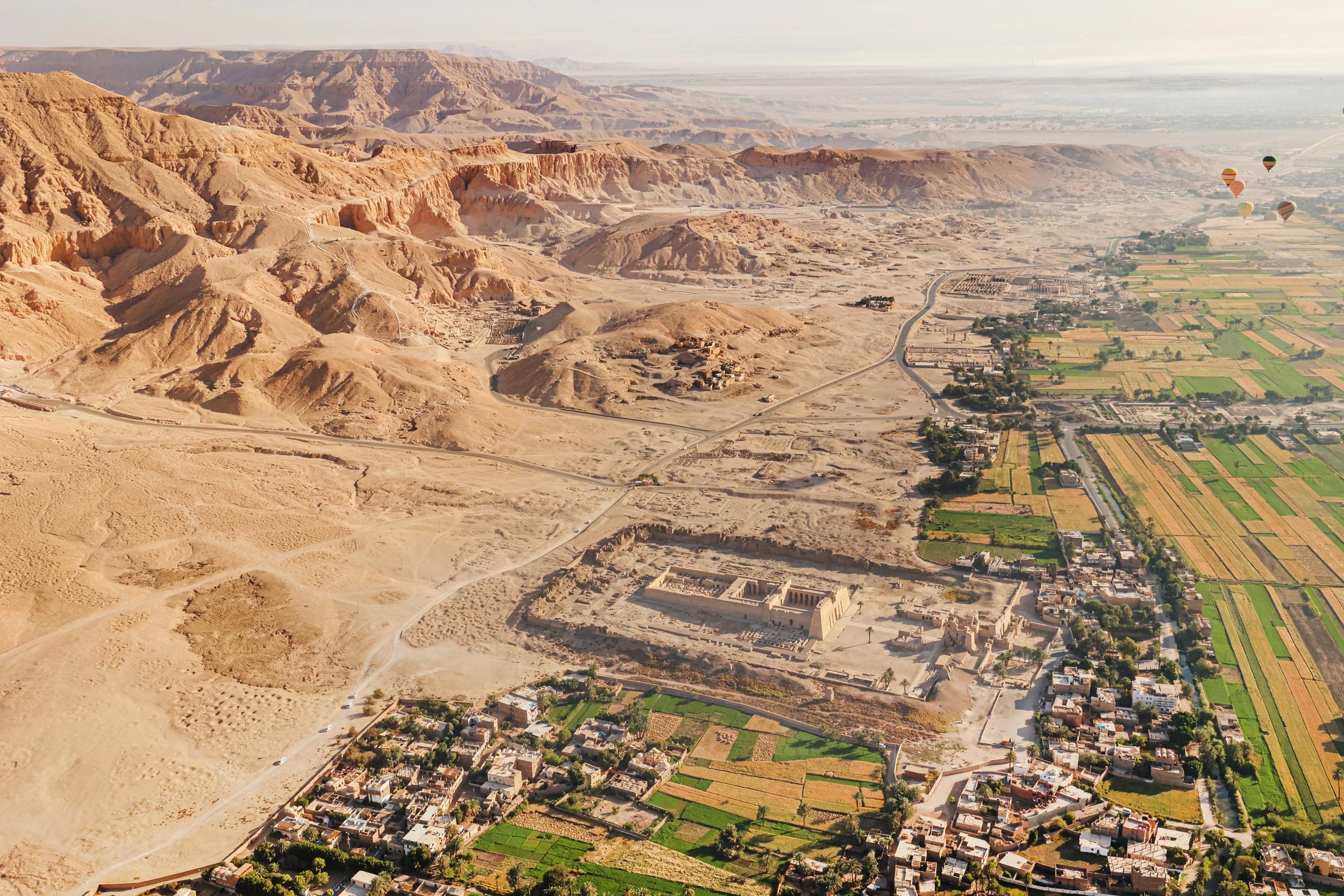
From being home to the Fertile Crescent at the time of the Babylonians, to becoming the most water-scarce region in the world, the Middle East and North Africa (MENA)* has seen drastic changes in its climate and relationship with land. Agricultural land has continuously expanded, yet freshwater reserves have dropped, and the pace of land degradation has accelerated. This has occurred alongside exponential growth in the local population and rate of urbanization, and shifts in economic sectors within the region, especially with the rise in oil revenues in Gulf Cooperation Council (GCC) countries, Algeria, and to a lesser extent Egypt.
Today, the sector employs around a fifth of the total workforce in non-GCC countries. Agriculture constitutes an average of 14% of GDP for non-GCC countries while averaging below 1.5% of national GDP for GCC countries.
This divergence is explained by both geophysical constraints on large-scale agriculture – including water scarcity, poor soils, and arid climate – as well as the dominant share of oil and gas in GCC economies.
With climate change accelerating at twice the global average rate in the region, increased drought and desertification, a predominantly young and growing population, and persistent political instability, the role of agriculture in enhancing food security and serving as a social safety net must be weighed against both the environmental pressures bearing down on the sector and those it generates.
The purpose of this analysis is to assess the current state of agriculture in the MENA region, examining first its socio-economic dimensions and then the environmental pressures bearing down on the sector. Following this context, the positioning of agriculture within global policy agendas is discussed, highlighting the trade-offs between long-term sustainability and short-term national food security objectives. The analysis concludes with recommendations on how to balance these competing pressures and goals.
Download the Analysis