|
|
Karim Elgendy
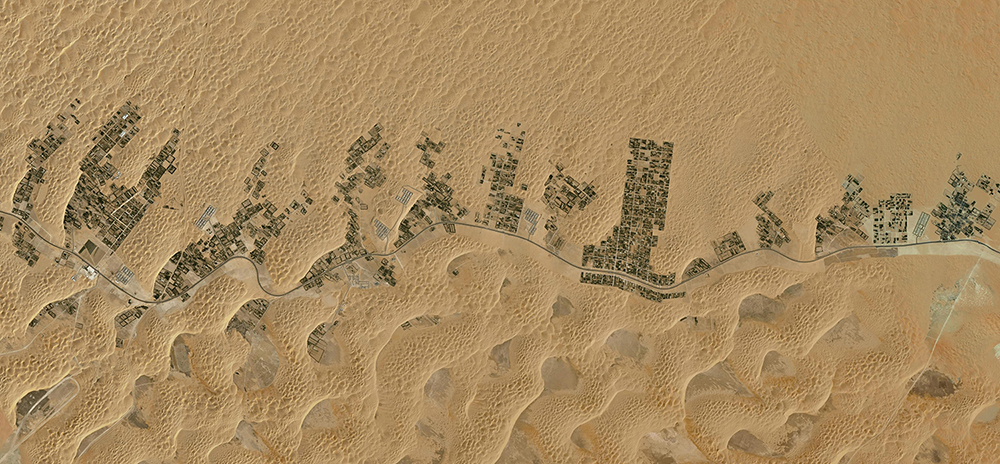 Liwa date farms benefit from some of the freshest ground water in the UAE. Copyrights: Google Those who visit the Middle East and North Africa from more temperate climates are often struck with how hot and dry the region is, and how scarce its rainfall. Some wonder why cities became established here, and how they continue to exist despite the lack of renewable freshwater.
These concerns are not entirely groundless. Yet these cities’ existence is not in any way miraculous: it’s merely an example of what can happen if cities fail to strike a sustainable balance between growth and limited resources.
Continue reading How Sustainable is Your Oasis?: A Review of Water Resources in Middle East Cities

On the 17th October 20102 , Karim Elgendy, founder of the Carboun initiative, was awarded the David Gottfried Global Green Building Entrepreneurship Award by the World Green Building Council. The award was presented to Karim in recognition of his efforts in coordinating Carboun’s research and communication work. It is was also awarded to acknowledge the role of the initiative in raising awareness of the green building movement in the Middle East and in shaping the way that cities in the region develop sustainably.
The WorldGBC is a network of national Green Building Councils in 98 countries around the world, with a membership of approximately 50,000 companies and other organizations, all with the aim of transforming the sustainability of the built environment and enabling sustainable living. The prestigious David Gottfried Award is given to individuals whose contribution to the global green building movement has been shown to be unique, innovative and entrepreneurial.
For more information on the award and official announcement from the World Green Building Council, please visit the 2013 Green Buildings Awards announcement page.
Rokia Raslan
 Wind Turbines in Egypt – Copyrights: Igor Srdanovic In aiming to analyse the underlying issues that contributed to the rolling power blackouts of 2012 in Egypt, the first part of this two-part article focussed on attempting to offer an answer to the question of why did the blackouts occur. Following on from this, this second part attempts to answer the next crucial question of how do we solve this problem. While the previous Egyptian Government has focused on promoting behavioural change strategies as their primary approach for bridging the energy gap, a number of alternative strategies such as infrastructure upgrade, demand side management, increasing energy efficient of buildings, and diversification of energy sources were available. In an aim to explore this diverse range of policy options, the following will highlight and discuss the potential impact of a number of these possible solution pathways.
Continue reading Empowering Egypt: Strategies
Rokia Raslan
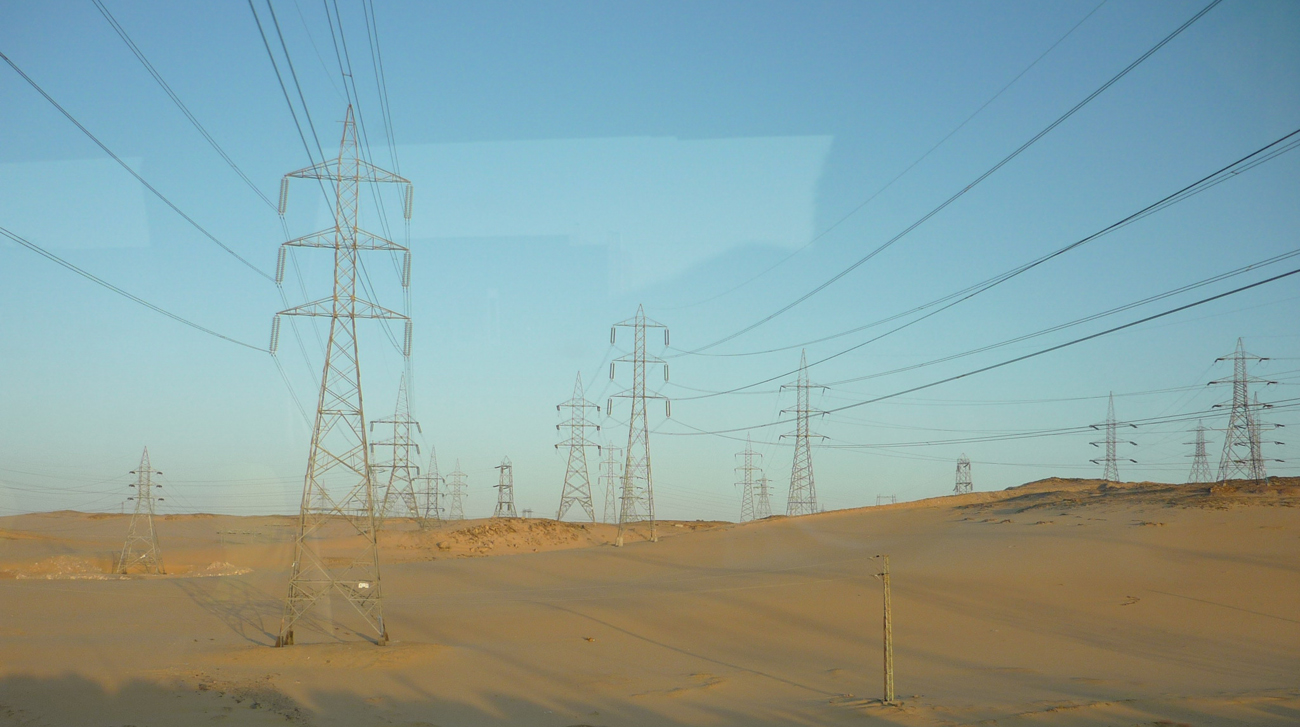 Power Infrastructure in Egypt. Copyrights: Rémih The past summer has seen something that many Egyptians had long forgotten: rolling power blackouts. Reports have cited that these month-long power cuts have affected everyday life for Egyptians in many ways. The outages stranded passengers on the Cairo Metro, raised concerns about night time safety and contributed to water supply interruption. Over a period of over a month the frequency of power cuts increased dramatically and were mapped by the crowd-mapping website, Kahrabtak. Power outages in some areas lasted 18 hours a day, hitting poorer residential districts especially hard and prompting protests in Fayoum, Gharbiya and Giza among others.
Continue reading Empowering Egypt: Challenges

Guy El Khoury
Despite the increasing global interest in renewable energy sources, electricity generation remains largely dependent on fossil fuels with approximately 70% of the world’s electricity currently being generated using coal, natural gas, and petroleum products. Coal, the most carbon intensive of the fossil fuels, accounts for the largest share of electricity generated globally, with 40% of all electricity generated.
Such reliance on fossil fuels is coupled with a relatively low conversion efficiency from fossil fuels to electricity, which averages 35%. The remaining 65% of the energy contained in fuels used is in effect wasted, lost as heat in power plant turbines and generators.
In this context, it is not surprising to learn that electricity generation stands as the top contributor to global Carbon emissions. According to the International Energy Agency (IEA), electricity generation currently accounts for approximately 50% of global carbon emissions.
In the Middle East and North Africa region, electricity and heat production are responsible for 41% of total carbon emissions according to IEA data from 2009. And while not representing a consumption sector, electricity generation ranked well higher than any individual sector, including transportation, which comes second and accounts for 25% of the region’s total carbon emissions. Yet carbon emissions from electricity generation is not equal across the region. In fact, the top 5 contributors to carbon emissions from electricity generation – namely Saudi Arabia, Egypt, the UAE, Kuwait, and Iraq – together represent 70% of the region’s electricity generation carbon emissions, according to 2009 data by the IEA, a share that represents approximately 30% of the region’s total carbon emissions.
Continue reading Carbon Footprint of Electricity in the Middle East

Marie Tyl
The institutional and legal setups of the Lebanese power sector define the decision making mechanisms, and identify the role of different stakeholders from the national electric utility, Electricite du Liban (EDL), to the Council of Ministers. In their current form, such laws and regulations do not grant EDL the tools and capabilities that would enable it to operate at the required standards and deliver reliable 24/7 electricity. Nor do they entice the utility to optimize its performance. Most importantly, the current setup largely exposes the power sector to political influence and their short-sighted calculations, which leads to the inefficient management of human resources, among other adverse results. Continue reading Institutional and Legal Challenges to 24/7 electricity in Lebanon
Marc Ziade
As Lebanon’s economy recovered from the Civil War, demand grew substantially and surpassed additional capacity of the current electricity generation levels. Power shortages progressively became the norm with some regions barely receiving 12 hours of electricity supply on some days.
The technical challenges that prevent sufficient volumes of electricity from getting reliably delivered to end-users span across the entire power system value chain: from insufficient capacity to large losses in the transmission and distribution networks. Continue reading Technical Challenges to 24/7 electricity in Lebanon
|
|